
|
David Andrews
University of East Anglia
United Kingdom
|
Short Bio
David Andrews is Professor of Chemical Physics at the University of East Anglia, where his group conducts research on fundamental photonics, optomechanical forces, optical vortices, nonlinear optics, energy harvesting and molecular energy transport. He has twenty books and over 350 research papers to his name. David Andrews is a Fellow of the Institute of Physics, the Royal Society of Chemistry, the Optical Society of America, and SPIE - the international optics and photonics society, in which he is the 2019 Vice-President.

|
Paulo António Ribeiro
LIBPhys
Portugal
https://libphys.pt/en/index.html
|
Short Bio
Paulo Ribeiro obtained his PhD in Physics and Materials Engineering in 1999 from the University of São Paulo (São Carlos Institute of Physics, Brazil). He is currently Associate Professor in the Department of Physics at the NOVA School of Science and Technology, Universidade NOVA de Lisboa (NOVA FCT). He is a founding member of the Functional Molecular Systems research group and an integrated researcher at LIBPhys (Laboratory for Instrumentation, Biomedical Engineering and Radiation Physics).
His research activity focuses on the development, processing, and characterization of functional molecular thin
films, with particular emphasis on photoresponsive materials, light–matter interaction, and laser-based surface structuring. His work is strongly aligned with photonics, including nonlinear optics, structured light, and the fabrication of optical elements for beam shaping and orbital angular momentum control. He has extensive experience in azobenzene-based systems and surface relief structuring for photonic applications.
He is Coordinator of the MSc in Physics Engineering at NOVA FCT and has been co-chair of the PHOTOPTICS – International Conference on Optics, Photonics and Laser Technology since 2013.
... More >>
|
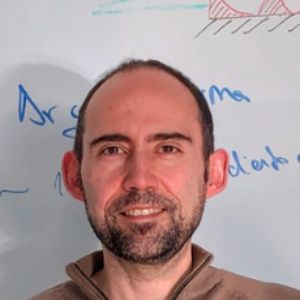
Pablo Albella
University of Cantabria
Spain
|
Short Bio
Pablo Albella is Associate Professor of Optics in the Department of Applied Physics at the University of Cantabria where he leads different research lines within the area of nano-optics, thermoplasmonics, chiral sensing and optical forces are the main ones. He is also visiting Researcher in the Department of Chemistry at Imperial College London.
He obtained his PhD in late 2009, awarded with the prize of best thesis in physics that year. Following his PhD, he completed two postdoctoral stays: one at the Materials Physics Center (CFM) in San Sebastian where he also held a Guest Researcher Position at C
IC Nanogune, and a four-year one at Imperial College London. In 2017, he obtained an Excellence Researcher position from the Government of the Canary Islands to join a research institute and create a research group in Nanophotonics. Subsequently, in June 2018, he gained a Ramón y Cajal tenure track position.
Mention, that he is the founder and organizer of an International Nanophotonics workshop on Nanophotonics, Plasmonics and Metamaterials (NanoPlasMeta) that takes place in conjunction with this conference since 2019.
... More >>

|
Maria Raposo
LIBPhys, NOVA School of Science and Technology
Portugal
https://libphys.pt/en/index.html
|
Short Bio
Maria Raposo is Full Professor of Physics at the Universidade Nova de Lisboa, Portugal, and Coordinator of the PhD Programme in Atomic and Molecular Physics. Her scientific interests are focused on the electrical and optical properties of ultra-thin films of polymers and biomolecules, interfaces and nanotechnology, colloids, and molecular architectures for applications in electronics, photonics, magnetism, and sensing. Her research also includes biomimetic membranes and the effects of radiation on biological systems. Her current work emphasizes the development of sensing devices for detecting trace molecules in c
omplex environments, including air, tap water, wastewater, and natural water bodies. She is also engaged in studying radiation effects on biological molecules under cell-like conditions, using encapsulation in liposomes.
... More >>
|
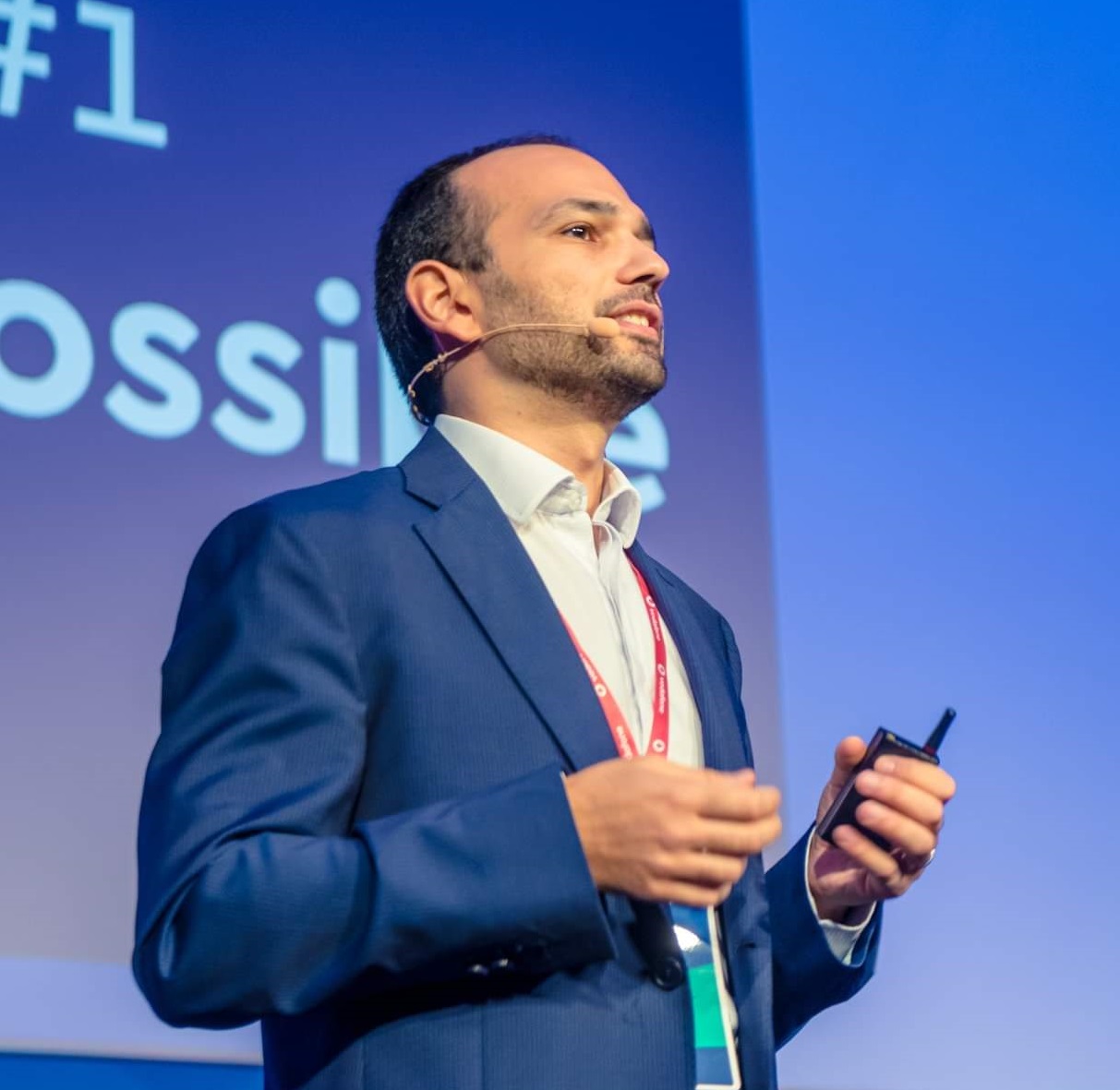
André Xuereb
University of Malta
Malta
|
Brief Bio
André Xuereb is physicist from Malta. He read for an undergraduate degree in mathematics and physics at the University of Malta, a PhD in theoretical physics at the University of Southampton in the UK, and a master degree in entrepreneurship at the University of Malta. He is professor of atomic and quantum physics at the University of Malta, is Science Policy Officer of the Malta Chamber of Scientists, represents Malta on several European research networks, and was recently elected as the first Maltese member of the Global Young Academy. André has an active career in science, having established and leading the quantum research group at the University of Malta, and co-owns an educational software startup.